The Money Diaries #1: Maya, 30, accountant for $5,150 per month: "At 45, I am retiring"

June 11, 2026
Part of The Money Diaries: Maya, 30, is an Ontario accountant earning about $5,150 net per month. She owns a house with her partner, rents out the basement, helps family monthly and wants full-time work to be optional by 45.

THE MONEY DIARIES
At 45, Maya wants work to be optional.
Maya, 30, is an Ontario accountant. She and her partner own a house, rent out the basement suite, support family monthly, and still save $3,660.
- Maya earns about $5,150 net a month on an $85,000 Ontario accounting salary.
- Her partner earns about $4,900 net a month, and their basement suite rents for $1,400.
- Their monthly surplus is $3,660, which is exactly what they save or invest.
The Money Diaries
A practical series about real-life budgets, tradeoffs, and Canadian money choices.
What's on this page
The Money Diaries follows Maya, 30, an Ontario accountant earning about $5,150 net per month on an $85,000 salary. Her partner earns about $4,900 net, their basement suite rents for $1,400, and their household saves exactly $3,660 a month.
Maya is 30. Her first name has been changed. She works as an accountant in Ontario and takes home about $5,150 net per month on an $85,000 salary. With her partner, she bought a house in 2024. They live upstairs and rent out the basement suite.
The house is both where they live and the centre of the plan. The basement rent does not make the mortgage painless, but it changes the monthly equation enough that Maya can see a possible exit from full-time work.
"At 45, I am retiring," she says. "Maybe I will still take a few accounting clients. Maybe I will work during tax season. But I do not want to depend on a full-time job anymore."
An accountant who watches her own books
Maya spends her workdays with payroll questions, sales tax files, year-end adjustments, bank reconciliations and business owners who call when a CRA letter arrives. She likes the work. She also knows exactly how quickly a comfortable salary can disappear once housing, cars, food, family help and repairs are ignored.
"Numbers do not flatter you," she says. "If the money is there, it is there. If it is not, you have to choose what matters."
She grew up in a family where money was handled carefully. Her parents worked hard, bought used, fixed things and sent money when relatives needed help. Maya still sends $200 a month to help family. It is not negotiable in her budget.
"It is part of my life," she says. "I do not separate money from family. I just put it in the budget so I do not pretend it costs nothing."
The house with a tenant downstairs
The couple bought a detached house for $725,000 after saving for years. It is not a glossy house. The basement needed work before it could be rented. The roof is on the list. There are always small repairs. But the numbers worked better than renting forever and trying to save the same amount on the side.
Before buying, they ran the payment again and again in a spreadsheet and through a mortgage affordability calculator. Maya wanted the house to survive a vacancy, a repair bill, or a rate renewal that did not go their way.
The basement rents for $1,400 a month. The money goes into the household account, not Maya's personal account. It helps cover the mortgage, property tax, insurance and utilities. The tenant is quiet, but Maya still thinks of the suite as work.
"People hear rental income and think it is easy money," she says. "It is not. It is a second job inside your house."
The salary is good. The lifestyle is not inflated.
Maya's income is now solid for her age. Her partner earns about $4,900 net per month on an $80,000 salary. Together, plus the basement rent, the household brings in $11,450 a month. That would be easy to spend if they treated every raise as permission.
They do not live like students. They buy good groceries, see friends, replace what breaks, go away for short trips and keep a line in the budget for gifts and clothes. But they do not finance furniture, carry credit-card balances or add subscriptions without deleting something else.
Maya drives a used Corolla. Her partner takes transit several days a week. The house has a repair list in the kitchen: roof fund, paint, basement storage, insulation, side door.
"The fun money is there," she says. "It is just not allowed to turn into a fixed payment."
Why the plan is not built around RRSPs
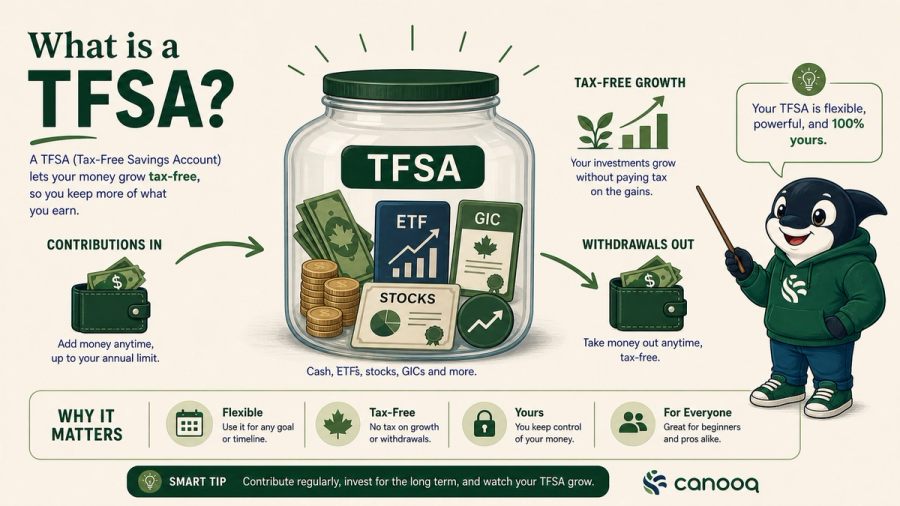
Maya is not using the RRSP as the centre of the plan because she wants flexibility before 65. Their surplus goes to TFSA contributions, a repair and vacancy reserve, a non-registered investing account and occasional mortgage prepayments. If her income rises a lot, she may use more RRSP room later, but the early-retirement plan needs accessible money.
She is not trying to stop earning forever. The goal is to stop needing the same job, same hours and same office rhythm.
"If I am 45 and still working because I chose it, fine," she says. "If I am 45 and I have no choice, then I ignored my own spreadsheet for fifteen years."
What 45 is supposed to look like
By 45, Maya wants the mortgage lower, the basement still rented, investment accounts much larger and enough cash set aside that she can choose part-time accounting, seasonal tax work or a year with fewer contracts. She does not talk about luxury. She talks about Mondays.
"I do not need to be on a beach," she says. "I need Monday morning to belong to me."
Maya's monthly wallet
These are household numbers, rounded. Maya's own net salary is about $5,150 per month. Her partner's income and the basement rent are included because the house plan only works as a household plan.
Income: $11,450 per month
- Maya's net salary: $5,150
- Partner's net salary: $4,900
- Basement suite rent: $1,400
Fixed housing and debt costs: $4,800 per month
- Mortgage payment: $3,300
- Property tax set-aside: $450
- Home insurance, electricity, gas and water: $300
- Renovation line of credit: $750
Everyday and variable spending: $2,990 per month
- Groceries and household basics: $750
- Transportation: $420
- Phones, internet and subscriptions: $210
- Restaurants, clothes, gifts and personal spending: $450
- Helping family: $200
- Health, pharmacy and small appointments: $160
- Home maintenance and tenant buffer: $450
- Travel and annual expenses sinking fund: $350
Monthly savings: $3,660
- TFSA contributions: $1,500
- Cash reserve for repairs and vacancy: $900
- Non-registered investing account: $760
- Extra mortgage prepayment fund: $500
Related articles:
Page details
Author: Canooq Editorial
Updated: June 11, 2026
Cite this page: Canooq.ca, The Money Diaries #1: Maya, 30, accountant for $5,150 per month: "At 45, I am retiring", https://canooq.ca/blog/money-diary-accountant-retire-by-45-canada
Canooq content is educational and may include affiliate or referral links. It is not financial, tax, legal, immigration, employment, mortgage, real estate, or healthcare advice. Verify official sources and provider terms before acting.